
Disney's relationship with the Sami people

My love for Finnish Lapphunds naturally grew into a deep admiration for the culture of their homeland. Over the years, I’ve had the privilege of embarking on numerous trips to Lapland, visits that felt more like personal expeditions, where I’ve immersed myself in the rich traditions, stories and everyday life of Sámi culture; the Indigenous inhabitants Lapland. Because of this, I’ve come to enjoy following Nordic news, culture, and history, and I hope you don’t mind if my ‘dog blog’ occasionally wanders into the cultural landscape that shaped these incredible dogs. Or perhaps, you will indulge me!
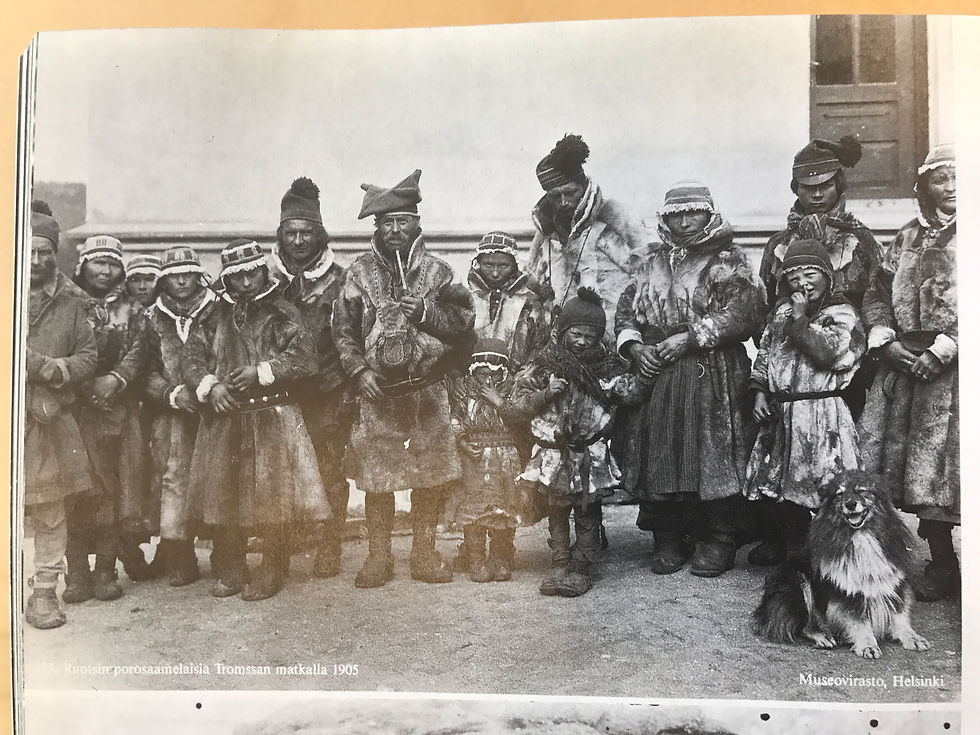
Photo: I took this photo of an image from a hard copy book at Jokkmokk library (Swedish Lapland) , during my visit in 2018

During my time in Lapland, I found myself drawn to learning as much as I could. I did this through spending solid days at local libraries, exploring museums and meeting with local Sámi representatives.

Lapland is a place that is magical beyond explanation. It may sound silly, but being present in a place of such magnitude; where the landscape, history, and culture are so deeply interwoven, left a lasting impression on me and forever changed the way I see the world.
That sense of wonder has remained with me to this day; and it sparked a desire to better understand how Sámi culture is represented in the wider world. So when I learned that Disney had collaborated with Sámi leaders during the making of Frozen II, I was both surprised and interested to learn about. And now share what I learnt with you.
When Frozen II arrived in cinemas in 2019, people were captivated by its mystical storyline and beautiful soundtrack. But behind the scenes, something even more meaningful had unfolded; a cultural agreement between the Walt Disney Company and the Sámi people. This unique collaboration marked a change in how major media studios engaged with Indigenous cultures, offering not just representation, but genuine respect, consultation and partnership.
Who Are the Sámi?

The Sámi are the Indigenous people of Lapland, which is the Arctic regions across Norway, Sweden, Finland, and Russia’s Kola Peninsula.
Traditionally semi nomadic, the Sámi have deep ties to animals, nature, storytelling, and song. Their spiritual beliefs centre on the interconnectedness of nature and themselves.
Like other Indigenous cultures, over centuries, the Sámi have experienced marginalisation and cultural suppression; and they continue to seek for recognition and preservation of their rich cultural identity even today. While the Nordic countries are thought of as being progressive, their governments stance towards the Sámi has and remains lacking.

Our precious Finnish Lapphund dogs were the dog of the Sámi people. They were a very important part of the Sámi life, and were used to herd reindeer, keep vermin away from camps and serve as loyal companions to young and old.
From Appropriation to Collaboration: Why Disney Made an Agreement for Frozen II
The original Frozen movie, released in 2013, incorporated elements of Sámi culture, such as a 'joik' inspired chant at the beginning of the film and aspects of Nordic folklore. However the movie producers did no consulting with the Sámi people in the making of this movie. This was criticised.
In response to the criticism and a growing awareness of ethical storytelling, Disney chose a new direction upon developing Frozen II. In 2019, the company entered into a formal collaboration agreement with the Sámi parliaments of Norway, Sweden, and Finland, as well as the Sámi Council. This agreement was grounded in the principle of 'Free, Prior and Informed Consent' (FPIC), as outlined in the United Nations Declaration on the Rights of Indigenous Peoples.
This collaboration ensured:
The respectful and informed portrayal of Sámi inspired culture
Ongoing consultation with Sámi cultural experts
The creation of a Northern Sámi language version of Frozen II, a historic first for a Disney film

The Sámi Influence in Frozen II
Northuldra Clothing and Sámi Gákti

The 'Northuldra people' in Frozen II were directly inspired by the Sámi. Their clothing mirrors the traditional gákti, a tunic style garment worn by the Sámi and decorated with symbolic patterns and colours indicating regional, familial, and sometimes marital information.
Northuldra outfits in Frozen II feature natural tones and flowing fabrics reflecting a deep bond with the earth. Traditional gákti often uses rich blues, reds, and yellows, with detailed embroidery and belts.
Above: Pictured on the left is the clothing shown in Frozen, and on the right traditional Sámi clothing.
Music: Joik vs. Northuldra Chanting
Music is a spiritual conduit in Sámi culture. Their 'Joik' is an ancient, traditional form of chanting. It is personal, emotional, and improvisational.
It often reflects a person, place, or spirit. Here is more information about the Joik, and a video by Norweigan Fred Buljo, and another from a Sami guide in Lapland.
The Northuldra chants in Frozen II are based on traditional Sámi joik singing. They were composed by Norwegian-Sámi musician Frode Fjellheim. The signature chant played when Anna and Elsa are welcomed into the tribe is titled "Vuelie". Watch here and see how it compares to the Joik's we have listen to.
Sámi Spiritual Values
Sámi spirituality is deeply connected to nature. Their worldview divides existence into three realms:
Upper World (spiritual/heavenly)
Middle World (our physical reality)
Underworld (ancestral and spirit realm)
Traditional Sámi shamans, called Noaidi, used drums and trance states to interact with spirits, seek knowledge, and maintain balance between the realms. Their spiritual practices stress harmony with the elements, a theme mirrored in Frozen II through the elemental spirits of fire, water, air, and earth.
Sámi Storytelling and Oral Tradition
Storytelling has always been a cornerstone of Sámi culture. Oral narratives pass down survival skills, history, ethics, and identity. These stories often emphasise:
Resilience in the face of adversity
Harmony with nature and animals
Cleverness and subversion of power (e.g., tales of Menes-Jussa, a trickster figure who outwits colonisers)
These values are reflected in the Northuldra, who live in harmony with the forest and spirits, and who resist domination by Arendelle's colonial past.
Released in Sami language
The International Sámi Film Institute had asked Disney to dub the original Frozen (2013) into North Sámi, but Disney declined. However, for the second instalment, given the learnings from the first, Disney decided to release a Sami language version of Frozen II.
Frozen II (Jikŋon II in North Sámi) became the first Disney movie to receive a (North) Sámi-language dub. North Sámi is the most widely spoken of the Sámi languages, but it is still a minority Indigenous language. Estimates suggest there are only around 15,000 to 25,000 speakers across northern Norway, Sweden and Finland. Producing a major Disney film in North Sámi gave children access to one of the world's biggest animated films in their own language, something that had never happened before.
As the presidents of the Sámi Parliaments and the Saami Council said when announcing the collaboration:
"We are beyond excited that the film, Frozen 2, will be accessible to Sámi children in their own native tongue."
They also noted that the announcement coincided with the United Nations International Year of Indigenous Languages (2019), giving the release additional symbolic significance.
While the Sami language version was appreciated by the Sami children, the move was hugely meaningful for their parents and grandparents. As I've lightly touched in on this article, the governments of Finland, Sweden and Norway, unfortunately pursued policies that suppressed Sámi language and culture. Each country to varying degrees.
In Norway, for example, the government had policies of 'Norwegianisation', where the use of Sámi languages was discouraged or even prohibited in schools. Many families stopped passing their language to their children because of discrimination. In my journeys in Lapland, I discovered that some Sámi in their 20's and 30's, were actively seeking to capture, restore and protective their culture. But doing so was difficult, because their parents were of an era where being Sámi was seen as undesirable, and hence due to these outward pressures they didn't learn or stopped using their language and traditions. Meaning today, much of this generation does not have the knowledge to pass down. So the Sámi who are young adults today are needing to actively seek much older Sámi people, or try to learn by alternative means. In an effort to restore and protect their culture and heritage going forwards.
This short history lesson helps to demonstrate how a mainstream Disney movie being released in a Sámi language, would be so meaningful to Sámi people today.
Marianne Pentha, who voiced Elsa in the North Sámi dub, spoke in press interviews about how the 'Norwegianisation' policies had affected her own family. She explained that hearing a Disney princess speak and sing in North Sámi represented something previous generations could scarcely have imagined.
When Frozen II was released, there was a promotional performance of a track from the movie, 'Into the Unknown'. This purpose of this performance was to celebrate the partnership between Disney and the Sámi community. It was sung as a bilingual duo.
It featured:
Marianne Pentha, who voiced Elsa in the North Sámi dub, she is a Sámi singer and performer from northern Norway
Lisa Stokke voiced Elsa in the Norwegian dub. She is a well known Norwegian actress and singer.
Rather than performing separate versions of the song, they alternated between Sámi and Norwegian, creating a musical dialogue between the two languages. Rather than presenting one language as secondary to the other, the performance placed them side by side, symbolising mutual respect and recognition. Given the history between the cultures, this was a hugely important moment of visibility and recognition for the Sami community.
This performance was broadcast on Norwegian television and later shared widely online.
Both singers described the North Sámi version of Frozen II as an important message to Sámi children that:
their language is valuable,
their culture is recognised,
and they belong in global popular culture.
If you have a moment (and if you've gotten this far into my article chances are you do!) please enjoy watching the stunning rendition here.
Reception from the Sámi Community
Reactions to Frozen II from the Sámi community were, by and large, positive.
Christina Henriksen from the Sámi Council said the collaboration meant the "Sámi way of thinking and values were more accurately represented."
The inclusion of Joik and natural themes resonated deeply with the Sámi, and many saw the film as a step forward in reclaiming cultural visibility. In a world where even in their own countries their culture is ofteb disregarded or simply not considered.
Still, some cultural critics noted that the Sámi influence remained symbolic rather than central. The Northuldra were never explicitly named as Sámi, which some viewed as a missed opportunity to provide direct representation and education.
Some felt the colonialism resolution was too 'neat'. Which is understandable, but it is a kids movie after all.
The Legacy of Collaboration
Disney’s partnership with the Sámi people on Frozen II demonstrated a model of ethical engagement with Indigenous cultures. Rather than exploiting cultural aesthetics, Disney chose to build a relationship based on respect, inclusion and recognition.
Just One Thing Missing…
There is however one important thing that Disney missed in making the movie.... Can you guess what that was? A Finnish Lapphund, of course!
With their rich Sámi heritage and cute faces, they would have fit right in among the Northuldra and served as perfect Disney characters! With Frozen III hitting the screens in 2027, will we see a Lappie trotting through the enchanted forest on the big screen?
Further Reading and Resources:


Comments